|
|
We are gearing up for the first of our annual sale days, the first of which will be at our Scotland branch in Newburgh on 8th & 9th August. Join us to connect with fellow beekeepers from the area, explore our fantastic selection of Logar equipment, and pick up a bargain or two! This will be followed by Windsor, Stockbridge and Devon in September at which you will be able to shop on the Sale Day and then the following Monday to Wednesday as well. The final event will be at our Head Office in Lincolnshire which will include our Open Day, with factory tours, beekeeping talks, and refreshments in our cafe. You can shop for collection right now by clicking the button below.
|
|
|
|
|
|
|
|
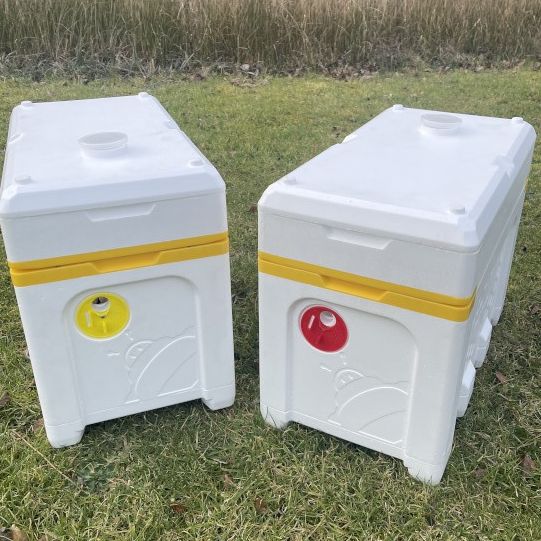
We are pleased to have the DSM Polynuc back in stock. Priced at £45. DSM stands for Dual Strong Multi, and that is exactly what this nuc is.
|
|
|
|
|
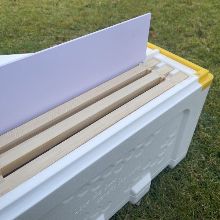
The DSM Polynuc is strong and durable, compatible with 6 Langstroth or British Standard frames (frames not included). It can also be split to create two 3-frame nucs, both with individual entrances. Made from polystyrene with a density of 120 grams per litre, with reinforced plastic edging.
|
|
|
|
|
|
|
|
- Choice of front or under floor entrance.
- Reinforced plastic edging that allows hive tool to be used without damage.
- Solid division board allows the 6 frame nuc to become two 3 frame nucs.
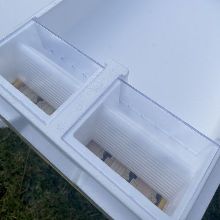
- Removable top feeder that can be accessed from both sides.
- Ventilated floor that can be closed.
- Feeder can be accessed without removing the roof.
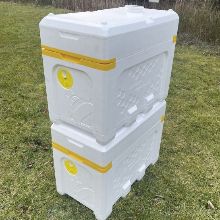
- Stackable with recesses for hive straps. Supplied in flat pack.
|
|
|
|
|
|
|
|
Formic Pro is a highly effective treatment for controlling Varroa mites in honey bee colonies. It is made with formic acid, a naturally occurring substance, and is known for its ability to penetrate the brood cells, targeting mites where they reproduce. Right now, we're offering 15% off Formic Pro 2 and 10 doses.
|
|
|
|
|
|
|
Producing Heather Honey - Part One
|
|
|
|
|
|
|
|
|
|
The August lecture video release from the 2024 lecture series was Professor Martin Giurfa’s talk on learning, memory and neurons: a journey to the cognitive world of honey bees.
|
|
|
|
|
Professor Martin Giurfa speaking on learning, memory and neurons
|
|
|
Despite having a 1 mm3 brain, honey bees exhibit a sophisticated behavioral repertoire. Bees learn and memorise multiple sensory cues related to flowers. In the lecture, Professor Guirfa highlights experimental challenges and suggests future directions for investigating the neurobiology of higher-order learning in insects, with the goal of uncovering basic neural architectures underlying cognitive processing.
|
In addition to the lecture itself, during last year’s show Martin Guirfa had a chat with Val about his research, which you can see by clicking the button below.
|
|
|
|
|
The National Honey Show‘s new online system for logging your show entries for our entries secretary will be going live in early August. For details visit our website. The summer is flying by, deadlines for show entries are quite soon. Registering (but not actually sending until instructed) entries for early classes: essays, videos, microscope slides and photographs, sent to external judges is 8th September 2025 and for all other entries is 6th October 2025. All the details for delivering and staging are in the Schedule, available from our website.
|
Remember: as well as some exciting new classes, most of the classes will have new class numbers, and many also have additional details and clarifications. New classes and those with new details are marked with a black triangular symbol in the schedule of classes:
|
Many thanks to Thornes for supporting the NEW decorated beehive Class 126: A Decorated Beehive: Painted or pyrography maximum 2 supers, no live bees. Do have a go: ALL entries, wherever your hive is sourced from, will receive a £50 voucher from EH Thorne (redeemable against £200+ spend). We’re really looking forward to seeing your creative entries.
|
The National Honey Show is looking for a new Membership Secretary to maintain the membership database, encourage new members and work with our team of volunteers organising the show each year. The post involves attendance at the Show itself, when a lot of members renew their subscription. For further information and informal chat please contact Fiona: gensec@honeyshow.co.uk
|
|
|
|
|
You are welcome to join us in making the show a success. Volunteering for stewarding at the show is rewarding, and we welcome you as part of the team. If you can spare half a day, or even a couple of hours do contact Bridget: steward@honeyshow.co.uk
|
We look forward to seeing you at this year’s show:
National Honey Show Thursday 23rd to Saturday 25th October 2025 at Sandown Park Racecourse, Esher, Surrey, KT10 9RT, UK.
|
|
|
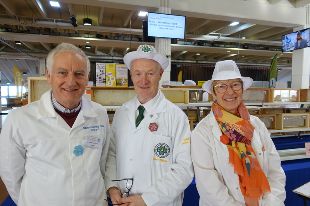
Stewards at The National Honey Show
|
|
|
|
|
|
 |
Bees for Development Journal – Invitation for Article Submissions
|
We are relaunching the Bees for Development Journal. If you would like to submit an article, share your beekeeping success, or have new research to pass on, please read the article submission guidelines HERE.
|
|
|
|
|
|
|
Abergavenny Food Festival – 20-21 September
|
|
|
|
|
Join Bees for Development at Abergavenny Food Festival! Come and celebrate all things food, community, and nature at this year’s Abergavenny Food Festival on 20 & 21 September. With a Stroller Ticket, you’ll gain access to six vibrant venues in the heart of town, featuring 200+ top-quality exhibitors, chef demonstrations, talks, debates, family entertainment, and live music.
|
|
|
|
|
Find Bees for Development in the Castle Grounds, and meet the team.
|
Catch us on the Local and Vocal stage on Saturday 20 September at 1.30pm, where Bees for Development will talk about their award-winning RHS Chelsea Balcony Garden, their Pollinate Change programme, and how community lies at the heart of everything they do.
|
From solitary bee identification and wildflower meadows in Wales to beekeeping in Amhara, discover how supporting bees means supporting people and planet.
|
For more information and to book your tickets, click HERE.
|
|
|
|
|
Money from honey: how bee farmers in Adjumani can thrive by the hive
|
|
|
|
|
Honey bees are at the heart of a bold and transformative initiative to tackle youth unemployment in Ethiopia. The Mass Youth Employment in Apiculture (MaYEA) project is setting out to create 1 million jobs for young people across the country.
|
This nationwide programme represents a powerful model of community-led development: empowering young people with the skills, tools, and support they need to thrive. As the demand for natural, sustainable products like honey continues to grow globally, Ethiopia is positioning itself as a leader in bee-based enterprise.
|
Read HERE to discover how Bees for Development Ethiopia are driving this ambitious initiative.
|
|
|
© Photo copyright of Bees for Development
|
© Photo copyright of Bees for Development
|
|
|
|
|
|
|
|
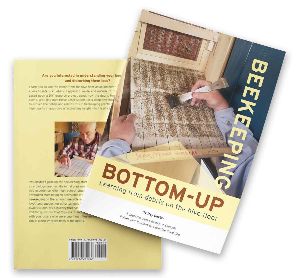
Bottom-up Beekeeping
Learning from the debris on the hive floor
by Ray Baxter
|
|
|
|
|
"A unique and groundbreaking look at hive debris as a window into colony life and health – built on Ray’s independent field research and scientific insight, with expert input from Ann Chilcott and Christine Coulsting, it offers insights not found in any other beekeeping text. Featuring over two hundred high-quality images, this work provides a visually rich and detailed perspective - The only book of its kind."
|
Northern Bee Books (1st ed. 2025)
Softback
202 Pages
£27
|
|
|
|
|
|
Just as the contents of someone’s waste bin could reveal both interesting and possibly obscure facts about their everyday life, so the debris that falls from a honey bee colony provides a similar indicator of the activity going on above. And in a new perspective for most beekeepers, Ray Baxter has carried out a detailed analysis of the material falling onto the inspection board, revealing fascinating patterns and behaviours that we would not see through momentary inspections alone.
|
In the first instance, the observations were simple ones intended to share with his students – the total weight of detritus produced over specific sections of the inspection board; bee parts, pollen types, evidence of pests and pathogens such as chalkbrood mummies and expelled varroa mites. But this quickly turned into a more detailed study from which he details his learning journey with humour and humility.
|
Dividing the inspection board into evenly spaces divisions which correlate with the frame spacing, the author has produced a fascinating array of data which visually maps the life of the colony - the spring expansion, peak activity in the summer and gradual contraction toward the latter part of the active season. Month by month, Baxter documents his finds, ranging from organic bee-produced debris, the outfall from ongoing life cycles as well as some more unexpected finds. The discovery of the consistent presence of man-made fibres – micro plastics – raises important questions about the extent to which human activity has permeated the colony in many ways that we may yet be wholly unaware of. At each stage, he records and explains the presence (or in some cases, absence) of a vast number of different materials, each of which tells part of the story of the thriving colony.
|
In his conclusions, the author considers stressors on the colony, which we know to be a bad thing, but continue to perpetuate by continually pulling the brood nest apart for inspections. This must be deeply invasive for the colony and is it necessary? While most would agree the ‘bottom-up’ approach cannot replace many aspects of top-down inspections, it is certainly a complementary approach and especially valuable during the winter months where it can provide an insight into the winter-functioning of the honey bee colony that we may not otherwise have and in providing a holistic view of the colony dynamics.
|
The author is careful to state that this is not a definitive guide – rather (in his own words) a month-by-month diary with pictorial illustrations and commentary. And indeed, the work is beautifully and amply illustrated with clear and informative diagrams, photographs and photomicrographs.
|
For one who has previously used the inspection tray in a purely functional capacity, this book has piqued my interest. It is nicely written and those at all experience levels will find some learning and food for thought within its pages.
|
|
|
|
|
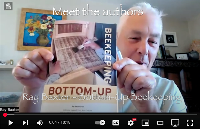
Check out the video on Northern Bee Book's YouTube channel, Meet The Author, for more from Ray Baxter regarding Bottom-Up Beekeeping.
|
|
|
|
|
|
|
|
|
|